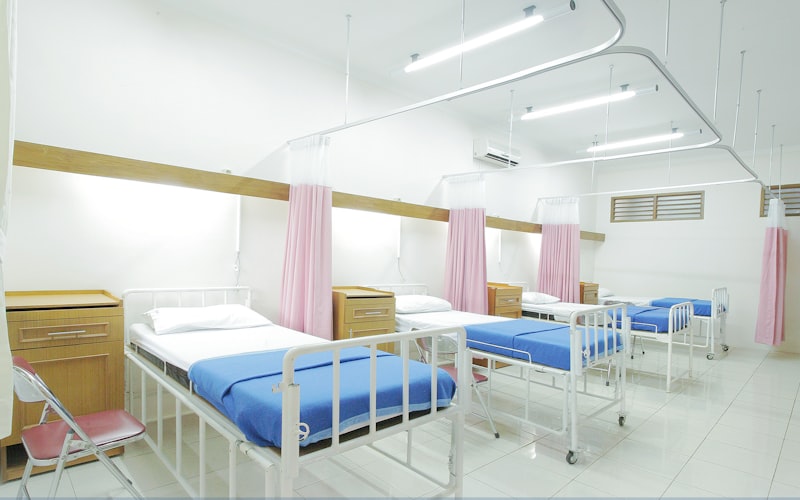
Discover how integrating advanced technology solutions can significantly improve patient safety outcomes. This article explores practical applications for hospital IT managers and clinic owners.
The healthcare industry is at a critical juncture, facing mounting pressures to enhance patient safety while managing operational complexities and rising costs. Ineffective communication, manual data entry errors, and a lack of real-time oversight contribute to preventable medical errors, impacting patient outcomes and organizational reputation. For hospital IT managers, clinic owners, and operations managers, the challenge lies in identifying and implementing technological solutions that not only streamline workflows but fundamentally improve the safety and quality of care delivered. This in-depth guide focuses on actionable strategies, grounded in evidence-based practices, to leverage technology for a safer healthcare environment. We will delve into the core concepts of technology integration for patient safety, explore specific implementation details with real-world examples and tool versions, provide practical code samples for technical applications, analyze data exchange formats, outline best practices for adoption, and address common questions to empower decision-makers with the knowledge needed to drive meaningful change.
The foundational principle of patient safety in healthcare is the prevention of harm to patients during the course of receiving care. Historically, safety initiatives have relied heavily on human vigilance, standardized protocols, and checklists. While these remain crucial, the inherent limitations of human performance – fatigue, cognitive biases, and information overload – necessitate the integration of technology as a robust safety net. Evidence from numerous studies highlights the direct correlation between technological adoption and reduced adverse events. For instance, the implementation of Electronic Health Records (EHRs) has been shown to decrease medication errors by up to 50% when fully optimized, primarily by providing drug-allergy interaction alerts and dose checking functionalities. Furthermore, the World Health Organization (WHO) in its 'Global Patient Safety Challenge: Clean Care is Safer Care' emphasizes the critical role of hand hygiene, a process demonstrably improved through technology-enabled monitoring and feedback systems. The challenge for healthcare leaders is to move beyond basic digitization towards intelligent systems that actively support clinical decision-making and proactively identify risks. This involves understanding the various technological domains that impact patient safety, including clinical decision support systems (CDSS), patient identification technologies, medication administration systems, and communication platforms. The goal is not merely to adopt technology but to integrate it seamlessly into clinical workflows in a manner that enhances, rather than hinders, the delivery of care. This section lays the groundwork by defining key technological concepts and illustrating their potential impact with empirical data.
Consider the impact of clinical decision support systems (CDSS). These systems provide clinicians with alerts, reminders, and relevant information at the point of care, helping to prevent diagnostic errors and inappropriate treatments. For example, a CDSS integrated with an EHR can flag a patient with a history of penicillin allergy when a physician attempts to prescribe amoxicillin, preventing a potentially life-threatening reaction. Research published in the 'Journal of the American Medical Informatics Association' (JAMIA) has consistently demonstrated that well-designed CDSS can reduce diagnostic errors by as much as 30% and improve adherence to evidence-based guidelines. The key lies in the system's ability to analyze patient data against a knowledge base of clinical best practices and alert clinicians to deviations or potential risks. Effective CDSS are not intrusive; they deliver timely, actionable information without overwhelming the user.
Patient identification is another critical area where technology plays a pivotal role. Misidentification can lead to wrong-site surgeries, incorrect medications, and delayed treatment. Technologies such as barcode scanning and RFID (Radio-Frequency Identification) are instrumental in ensuring that the right patient receives the right care. A study in 'Anesthesia & Analgesia' found that barcode medication administration (BCMA) systems reduced medication administration errors by over 40%. These systems typically involve scanning a patient's wristband and the medication to confirm a match before administration, creating a critical safety check.
Furthermore, communication technologies are transforming how healthcare teams collaborate. Secure messaging platforms and integrated communication systems within EHRs can reduce delays in information exchange, ensuring that critical patient updates reach the relevant providers promptly. The absence of effective communication is consistently cited as a root cause in a significant percentage of sentinel events reported to The Joint Commission. Technologies that facilitate real-time, secure communication can mitigate these risks substantially.
Successful technology implementation in healthcare requires a strategic, phased approach that considers clinical workflows, staff training, and interoperability. For hospital IT managers and clinic owners, selecting the right tools and ensuring their seamless integration is paramount. This section details practical implementation strategies, focusing on specific technologies and their application, referencing current versions of relevant software and standards to ensure relevance and effectiveness.
Electronic Health Records (EHRs) Optimization: While many institutions have adopted EHRs, optimizing their use for patient safety is an ongoing process. Focus on implementing or enhancing modules for Computerized Provider Order Entry (CPOE) with integrated Drug-Drug and Drug-Allergy interaction checking. Utilize functionalities for allergy and problem list management, ensuring they are consistently and accurately populated. For instance, implementing a system like Epic's Cogito or Cerner's Millennium with robust CDSS capabilities can provide real-time alerts. Ensuring these alerts are evidence-based and actionable, and not merely a nuisance, requires careful configuration and ongoing review based on clinician feedback and adverse event data. Versions like Epic 2023 or Cerner 2024 Q1 releases often include updated clinical content and improved alert logic.
Barcode Medication Administration (BCMA): BCMA systems are a cornerstone of medication safety. Implementation involves assigning unique barcodes to patients (via wristbands) and medications. Clinicians scan the patient wristband, then the medication barcode, and finally, a confirmation scan of their own ID badge. This multi-step verification process, often integrated with EHRs using protocols like HL7 v2.x messaging, significantly reduces the risk of administering the wrong medication or dosage. Systems from vendors like McKesson (e.g., Supply chain management solutions integrated with their EHR) or specialized BCMA providers should be evaluated. Ensuring the barcode symbology (e.g., Code 128, Data Matrix) is consistently applied across all medications and patient identifiers is crucial. Training staff on the precise workflow and troubleshooting common scanning issues (e.g., damaged wristbands, poor print quality) is vital for successful adoption.
Smart Infusion Pumps: These devices connect to the EHR and can be programmed with drug libraries containing pre-set dose limits and infusion parameters for specific medications. This prevents programming errors and ensures infusions are administered within safe ranges. Modern smart pumps, such as those from Baxter (Sigma Spectrum) or B. Braun (Outlook 1100), often support HL7 integration for automated data transfer. The drug libraries must be meticulously maintained, updated regularly based on formulary changes and best practices, and regularly audited for compliance. The configuration of these libraries is a critical safety function, requiring dedicated pharmacy and nursing informatics involvement.
Patient Identification Technologies: Beyond barcodes, consider solutions like RFID for tracking high-value assets and potentially patients in specific care areas, or biometric identifiers for enhanced security in sensitive environments. For patient identification, multi-factor approaches are increasingly common. For example, combining barcode wristbands with visual confirmation by the caregiver remains a standard. Advanced systems might integrate with RTLS (Real-Time Location Systems) to ensure patient location data is accurate, preventing delays in critical interventions.
Secure Communication Platforms: Implementing secure, HIPAA-compliant messaging systems like those offered by TigerConnect or Microsoft Teams (with appropriate BAA and configuration) can streamline communication between care teams. These platforms should integrate with EHRs to pull patient context, reducing the need for manual information retrieval and minimizing communication errors. Features like role-based access and read receipts enhance accountability and efficiency. The integration should adhere to interoperability standards like FHIR (Fast Healthcare Interoperability Resources) to ensure data can be exchanged securely and efficiently.
Effective patient safety technology hinges on seamless interoperability – the ability of different health information systems, devices, and applications to access, exchange, exchange, and cooperatively use data in a coordinated manner, within and across organizational, regional, and national boundaries, to provide patients and providers with the highest standard of care. This requires adherence to robust data exchange standards. For healthcare IT managers, understanding these standards is not optional but essential for building a connected and safe care ecosystem.
HL7 Standards: Health Level Seven (HL7) provides a suite of international standards for the transfer of clinical and administrative data between software applications used by various healthcare providers. HL7 v2.x is the most widely used standard for messaging. For example, an ADT (Admission, Discharge, Transfer) message, typically conforming to the ADT^A04 event type, is used to notify ancillary systems (like lab or radiology) when a patient's demographic or location information changes. Similarly, ORU (Observation Result Unsolicited) messages are used to send lab or radiology results back to the EHR. Ensuring parsers are configured correctly for specific message structures and versions (e.g., HL7 v2.5.1) is critical. Many integration engines, such as Mirth Connect (versions 3.x) or Rhapsody, are designed to facilitate the transformation and routing of HL7 v2 messages.
FHIR (Fast Healthcare Interoperability Resources): FHIR is a newer standard developed by HL7 that represents healthcare information as a set of modular components called 'Resources'. FHIR aims to simplify healthcare data exchange through a modern API-first approach, leveraging RESTful web services. For example, retrieving a patient's allergies can be done using a FHIR API call like `GET /Patient/{id}/AllergyIntolerance`. This makes it easier for applications, including mobile apps and patient portals, to access and interact with clinical data. Implementing FHIR servers, such as the HAPI FHIR server (version 6.8.x) or Google Cloud Healthcare API, allows for standardized data access. Understanding FHIR resource types (e.g., `Patient`, `Observation`, `MedicationRequest`) and their relationships is key for developers building interoperable applications. FHIR R4 (4.0.1) is the current normative version widely adopted.
DICOM (Digital Imaging and Communications in Medicine): For medical imaging, DICOM is the international standard. It defines image formats and communication protocols for medical imaging devices. Integrating imaging systems requires adherence to DICOM standards for image storage, retrieval, and transmission. Understanding DICOM tags (e.g., Patient Name, Patient ID, Study Instance UID) is crucial for managing imaging data within the healthcare IT infrastructure.
Integration Engines and Middleware: Tools like Rhapsody (v6+) or Mirth Connect (v4.x) act as middleware, enabling the translation and routing of data between systems using different standards (e.g., HL7 v2 to FHIR, or proprietary formats to HL7). Configuring these engines requires a deep understanding of the source and target system's data formats and the desired transformation logic. For example, a common task is to convert an HL7 v2 ORU message into a FHIR `Observation` resource for broader accessibility.
Example Code Snippet for FHIR API Interaction (Node.js):**
// Using the 'fhir-http-client' library for Node.js (version ^1.0.0)const FHIRClient = require('fhir-http-client');const express = require('express');const app = express();const port = 3000;// Configure your FHIR server URL and clientconst client = new FHIRClient({
baseUrl: 'https://hapi.fhir.org/baseR4/' // Example public FHIR server});app.get('/patient/:id/allergies', async (req, res) => {
const patientId = req.params.id;
try {
// Fetch AllergyIntolerance resources for a given patient
const allergies = await client.search('AllergyIntolerance', {
`patient: patientId`
`});`
`if (allergies && allergies.entry) {`
`res.json(allergies.entry.map(entry => entry.resource));`
`} else {`
`res.status(404).send('No allergies found for this patient.');`
`}`
`} catch (error) {`
`console.error('Error fetching allergies:', error);`
`res.status(500).send('An error occurred while fetching allergies.');`
`}`
`});`
`app.listen(port, () => {`
`console.log(`FHIR client app listening at http://localhost:${port}`);`
`});`
This Node.js code snippet demonstrates how to use the `fhir-http-client` library to interact with a FHIR R4 server. It sets up a simple Express.js server that exposes an endpoint to retrieve allergy information for a specific patient ID. When a request is made to `/patient/:id/allergies`, the code constructs a FHIR search query for `AllergyIntolerance` resources associated with the provided `patientId`. It then sends this query to the configured FHIR server. If successful, it returns the found allergy resources as JSON. Error handling is included for cases where no allergies are found or if a server error occurs. This illustrates how modern APIs can be used to access clinical data programmatically, facilitating integration between different healthcare applications.
Understanding the structure of data payloads exchanged between systems and implementing robust error handling mechanisms are critical for maintaining data integrity and system reliability. This section provides examples of common data formats and strategies for managing errors in a healthcare IT environment.
Example HL7 v2.5.1 ORU^F18 Message (Observation Result):
MSH|^~ egular|SENDING_APP|SENDING_FACILITY|RECEIVING_APP|RECEIVING_FACILITY|20231027103000||ORU^F18|MSG00001|P|2.5.1PID|1||PATID12345^^^PATIENTIDTYPE|LASTNAME^FIRSTNAME^MIDDLE^PREFIX^SUFFIX||19800101|M|||123 MAIN ST^^ANYTOWN^CA^90210|OBR|1|ORDERID123||LABTEST^Hemoglobin|||20231027100000|||CLINICIAN^DR^A^B^MD|||||SPECIMENID5678OBX|1|NM|HGB^Hemoglobin|14.5|g/dL||Normal|||F|||20231027101500OBX|2|NM|WBC^White Blood Cell Count|7.5|x10^9/L||Normal|||F|||20231027101600
This HL7 v2.5.1 message represents laboratory results. The MSH segment contains header information. PID identifies the patient. OBR describes the order for the tests. The OBX segments contain the actual results: the first OBX shows a Hemoglobin (HGB) result of 14.5 g/dL, and the second shows a White Blood Cell (WBC) count of 7.5 x10^9/L. Each field within these segments has a specific meaning defined by the HL7 standard. Accurate parsing of these messages is essential for populating EHRs correctly.
Example FHIR R4 Observation Resource (JSON):
{
  `
Belum ada komentar. Jadilah yang pertama!